Fence Removal
Removal of accessible residential fence sections, gates, posts and related non-hazardous material after the job scope is confirmed.
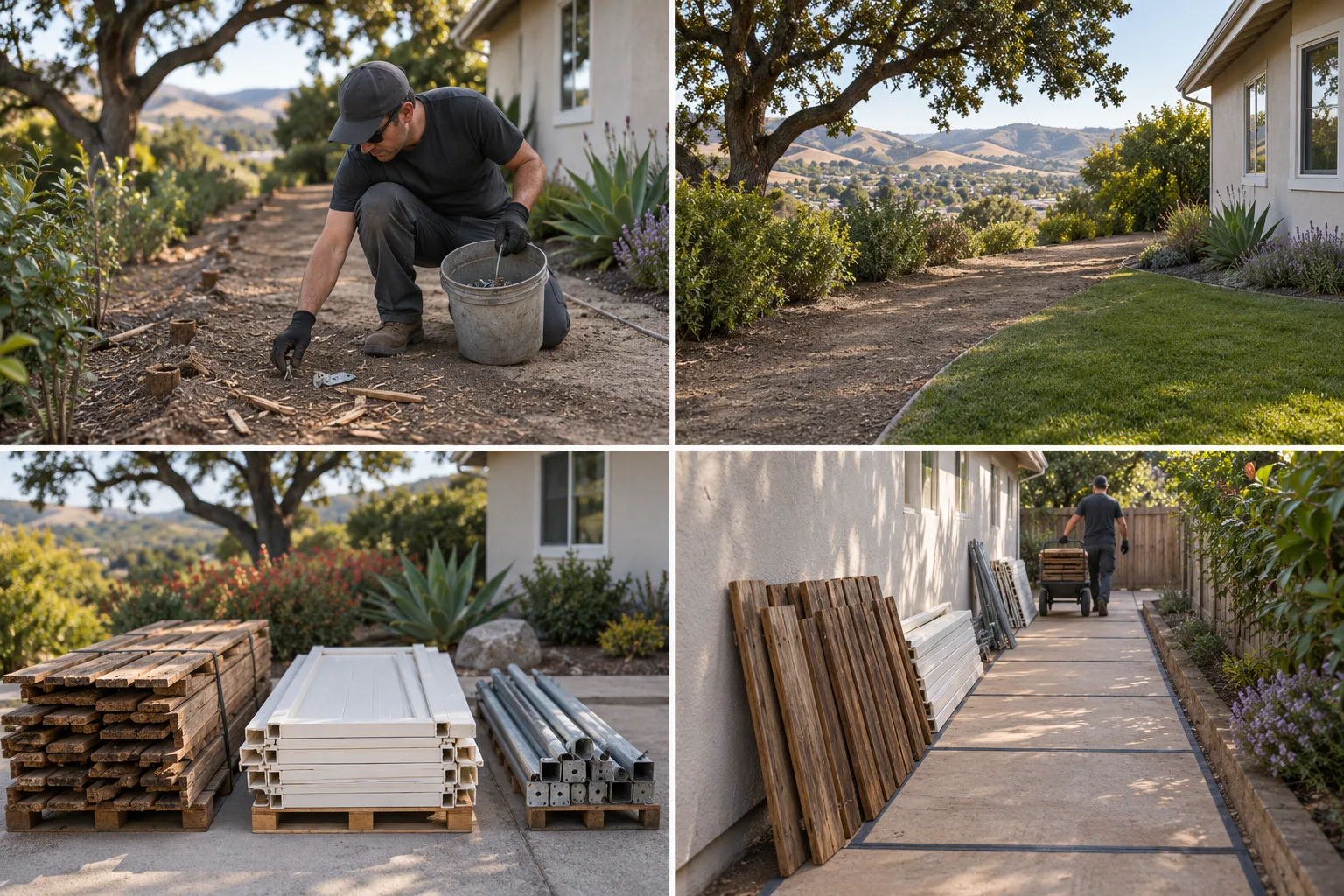
Jobs that fit this scope
- Removing one run while another boundary stays in place
- Opening a side yard or preparing for a new layout
- Taking down a mixed-material or previously repaired fence
What changes the work
- linear footage and number of sections
- post depth and concrete
- shared boundaries or attached structures
- material separation and loading route
Before the crew arrives
Confirm that you control the fence or have permission to remove it. Mark the exact run, gates and returns. Move loose yard items out of the path, keep pets away and disclose irrigation, wiring, lighting, vines or structures connected to the fence.
If post or footing work may disturb soil, the location of underground utilities must be handled through the proper California notification process. Do not rely on memory or an old sketch.
Panels are only part of the load.
Gates, posts, concrete, rails, mesh, fasteners and added wire can change both dismantling and hauling. The crew should confirm the visible scope before work begins. Unknown hazardous or contaminated material is outside ordinary fence-debris service.
San Luis Obispo County IWMA says local facilities may accept construction and demolition material, including wood, scrap metal and mixed C&D. Facility acceptance, hours and fees should be checked for the actual load.
Questions about complete removal
Does the scope include posts?
Post and footing removal should be stated separately. Depth, concrete, access and underground conditions can change the plan.
What should I measure?
Estimate the total length and height, count gates and posts, and measure the narrowest gate or turn between the fence and loading point.
Can material be recycled?
Do not assume a destination. Material condition, contamination and current facility acceptance determine the route.
Show us the fence line, not just one close-up.
Have the approximate length, material, post setting, gates, attachments, access route and intended timing ready when you call.