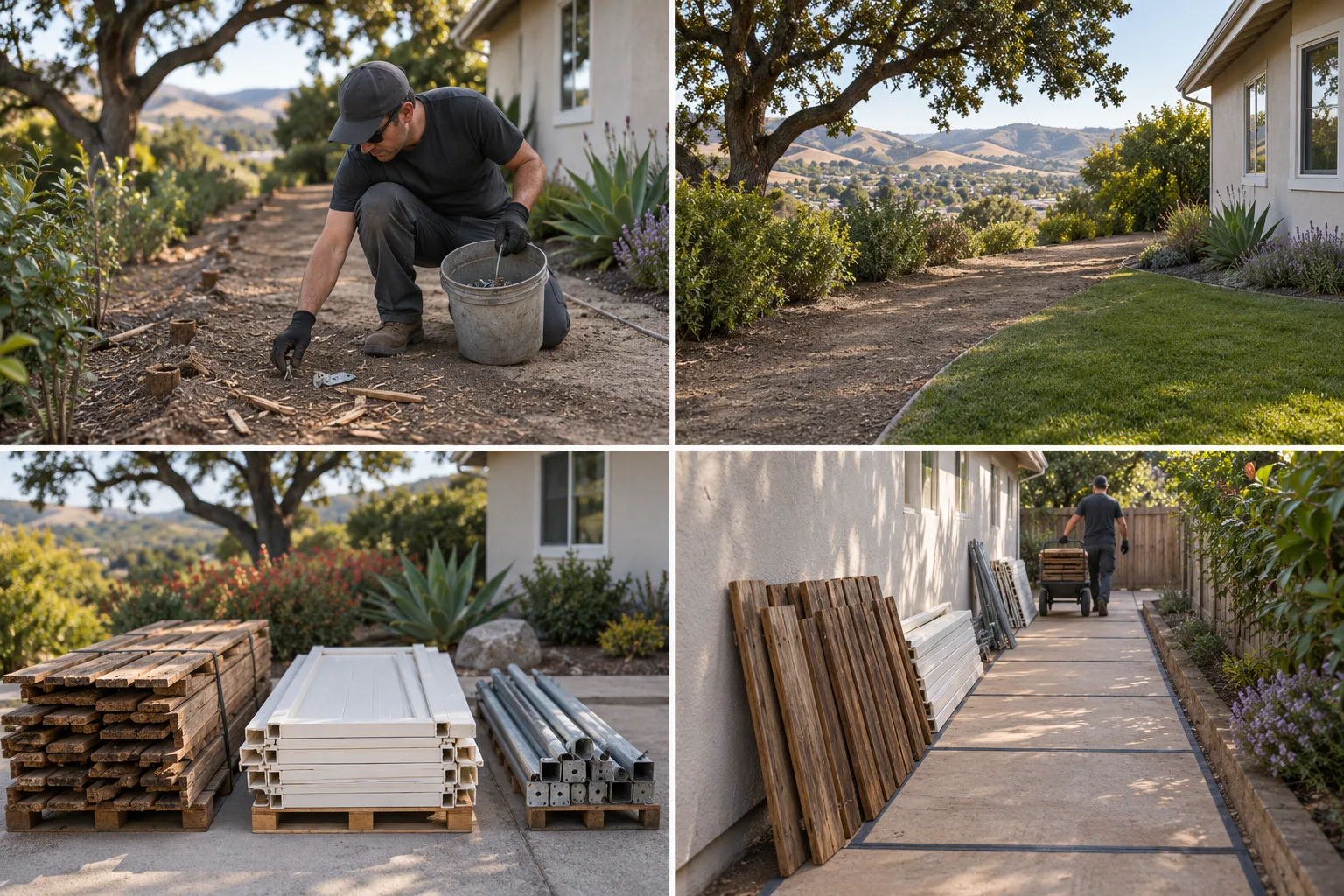
Photograph both sides
Take wide photographs of the whole run and closer images of posts, footings, vines, wires and attached fixtures. Record grade changes and tight passages. These images help distinguish a simple panel lift from a job with concrete, buried edges or limited staging space.
Coordinate the gap between crews
Decide whether removal and replacement happen the same day, on consecutive days or farther apart. Plan for pets, pools, children and any place where the open boundary changes security. Temporary barriers belong in the scope only when a provider has agreed to supply them.
Prepare the handoff
Ask the installer what must be removed: panels only, posts to grade, complete footings or a specific clearance. Share that answer with the removal provider. Keep the final walk-through focused on the line, remaining hardware and access for the next crew.
Before you call
- Fence sections to remove are marked
- Owner or neighbor questions are resolved
- Utilities and irrigation near posts are identified
- Replacement timing and temporary security are planned
- Required clearance is confirmed with the installer
Local disposal and excavation checks
San Luis Obispo County IWMA lists current construction and demolition facilities and advises customers to confirm accepted materials, hours and fees directly. If fence-post work will disturb soil, use California’s proper utility-notification process and wait for the required response before excavation.
Planning the service itself? Review fence removal, then call with the fence line, access and timing.