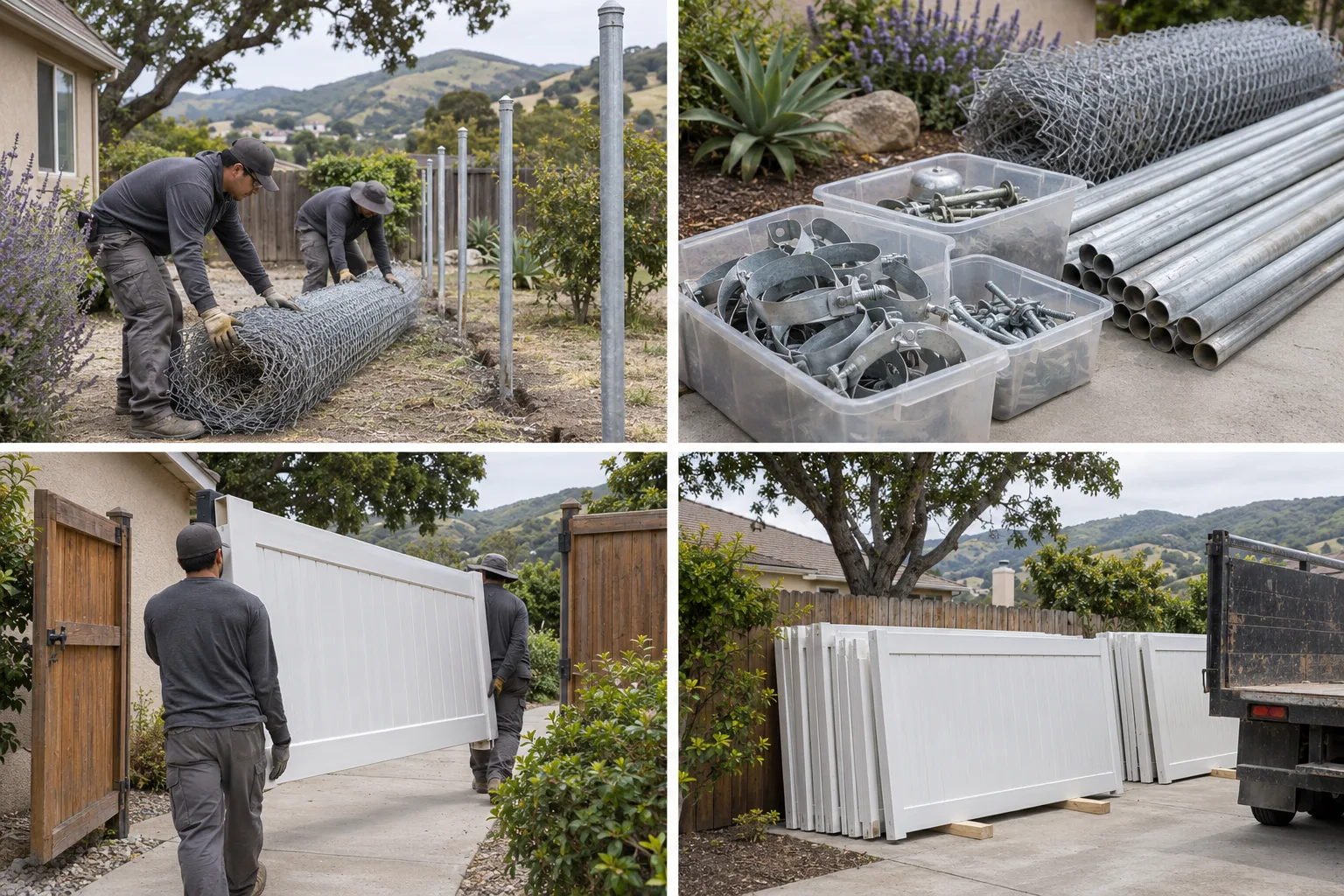
Map the tension points
Identify corner, end and gate posts. These terminal points usually carry tension bands and bars. Photograph damaged or improvised connections so the crew knows where the fabric may release unevenly.
Remove access problems, not fence parts
Clear furniture and loose material from the route, but leave tension hardware and wire work to the agreed crew. Pulling at mesh before the system is controlled can create sharp ends and an awkward springing roll.
Separate vegetation questions
Vines woven through mesh can add time and weight. Confirm who is responsible for cutting them and whether any plant belongs to a neighbor. Poison oak or thorny growth should be disclosed before a site visit.
Prepare a loading area
Rolled mesh, rails, gates and posts take different shapes. Keep a flat staging zone available and share the distance to the truck. Concrete on posts adds dense weight and may change the disposal route.
Before you call
- Terminal and gate posts counted
- Vines and wire attachments photographed
- Safe staging space available
- Truck route and gate width measured
- Concrete on posts disclosed
Local disposal and excavation checks
San Luis Obispo County IWMA lists current construction and demolition facilities and advises customers to confirm accepted materials, hours and fees directly. If fence-post work will disturb soil, use California’s proper utility-notification process and wait for the required response before excavation.
Planning the service itself? Review chain link fence removal, then call with the fence line, access and timing.